TriDurLE Funded Project on Use of Computer Vision for Post-Event Bridge Inspection
… Continued
Developing vision capabilities
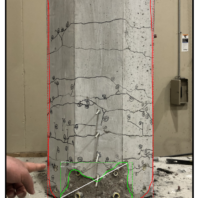
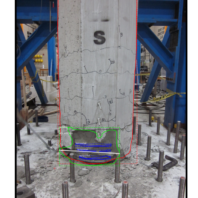
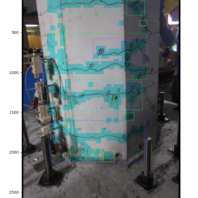
During Phase 1 of the project, the researchers have been developing the software’s capability to visualize various types of damage in a concrete column. “Bridge columns are usually made with concrete,” Tazarv pointed out. “From there, we can expand to different bridge components and maybe other types of structures.”
This vision-based software can expedite the inspection process. “It can see concrete damage, including cracking, their angles, spalled area and exposed rebar,” Tazarv said. “Once the program is refined, we can examine the structural components from all angles and even use color coding to categorize the severity of the damage and report that information to the inspector.”
He envisions integrating the software in a mobile app, which would make it possible for an untrained individual to use the software to scan bridges and transmit the images to a central inspection office. Using that knowledge, trained personnel can then determine whether a bridge, for instance, can be opened or not, Tazarv explained.
Another possibility is to incorporate the software into a drone, for which Tazarv will rely on the expertise of another SARCI researcher, assistant mechanical engineering professor Marco Ciarcià, who specializes in controls, robotics and multirotor vehicles.
A software-equipped drone could fly around structures and send the information to the transportation office to expedite inspections. “We could send a fleet of drones to pinpoint cracks in structures,” he said.